Since the end of the Cold War the $billions spent for national defense is typically a major political debate issue every election cycle. For some, the Pentagon’s budget is full of waste and way out of proportion to more important social needs. For others, the amount is not enough to maintain our present capabilities and build for future threats.
Let’s look at the current state of defense depending, how does it compare to the federal budget, and most importantly, how sustainable will it be as federal spending becomes more and more squeezed by increasing costs of social programs and interest on the national debt.
(For some of my data sources I used Peter G. Peterson Foundation charts (www.pgpf.org) and the Stockholm International Peace Research Institute (SIPRI) (www.sipri.org/).
Department of War FY 2025 Budget
So let’s start out with a big number. The Department of War (DoW) had a fiscal year 2025 budget of around $850 billion (Chart1). When we include other military-related spending (such as nuclear weapons program and intelligence operations) the total military budget increases to $884 billion).
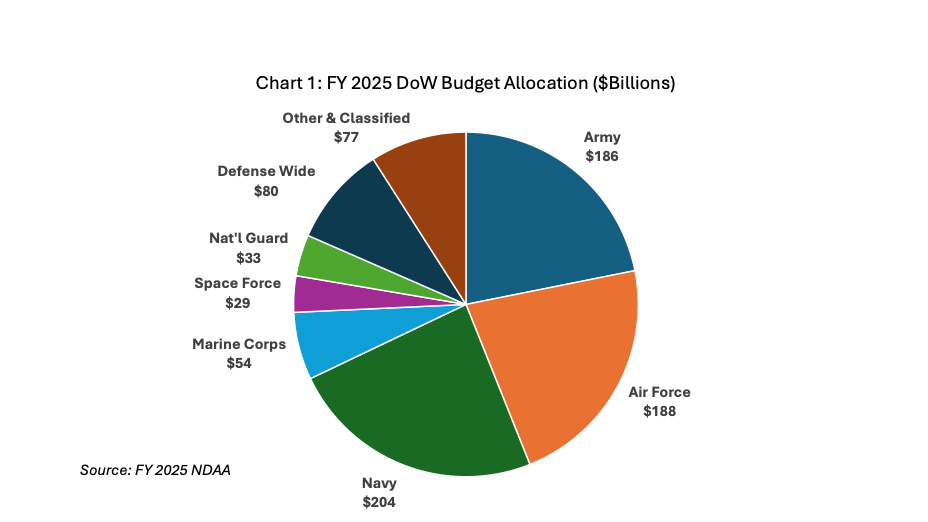
The FY 2025 budget was few percent more than FY 2024 with the same allocation percentage. Comparative data is not available for FY 2025; however the FY 2024 data will work very well for my comparative analysis.
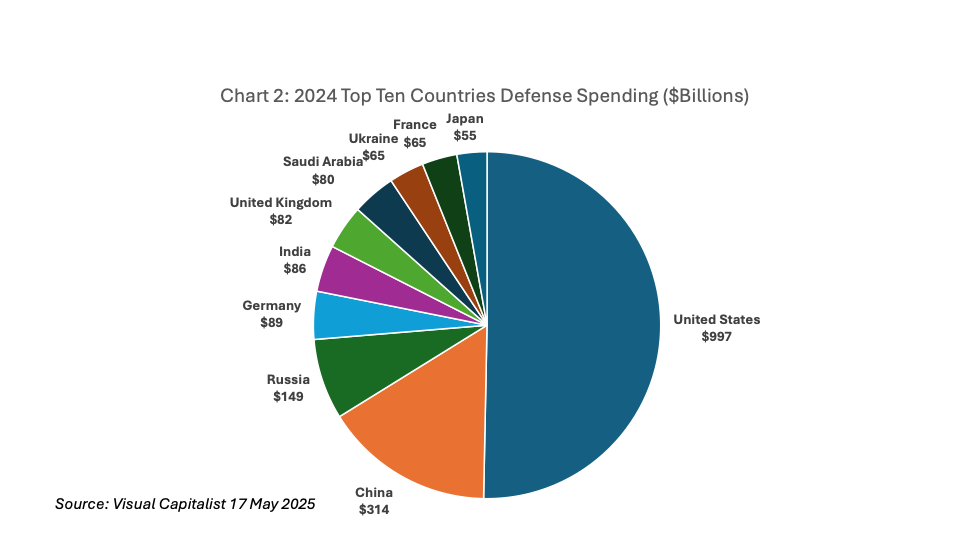
US Defense Spending Is Three Times More Than China
Of course, as the world’s biggest superpower the US spends the largest amount on defense in the world. It is significantly more. We spend about 37 percent of the world total of $2.7 trillion, and more than the next nine countries combined (Chart 2).
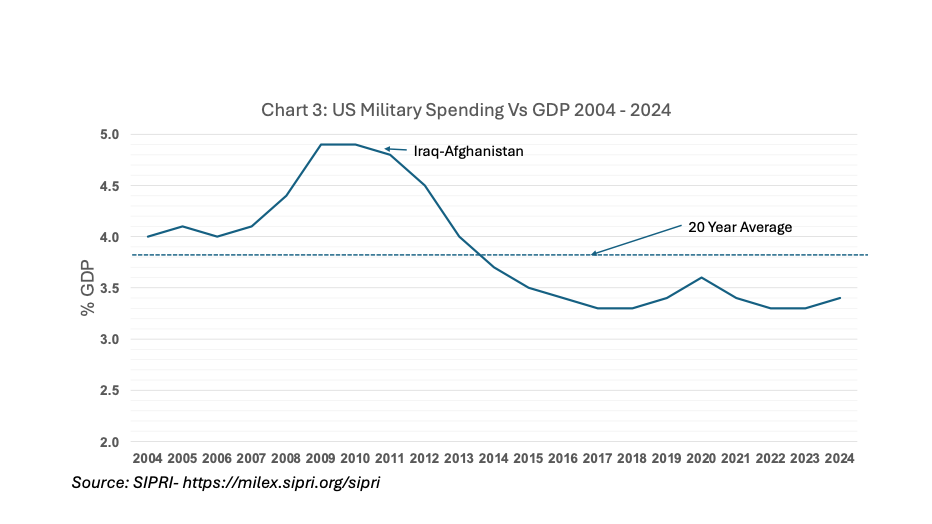
US Defense Spending is a Very Small Part of the US Economy
$850 billion for the War Department is a big number. But very small when compared to the massive size of the US economy, the gross domestic product (GDP), of $30 trillion (Chart 3).
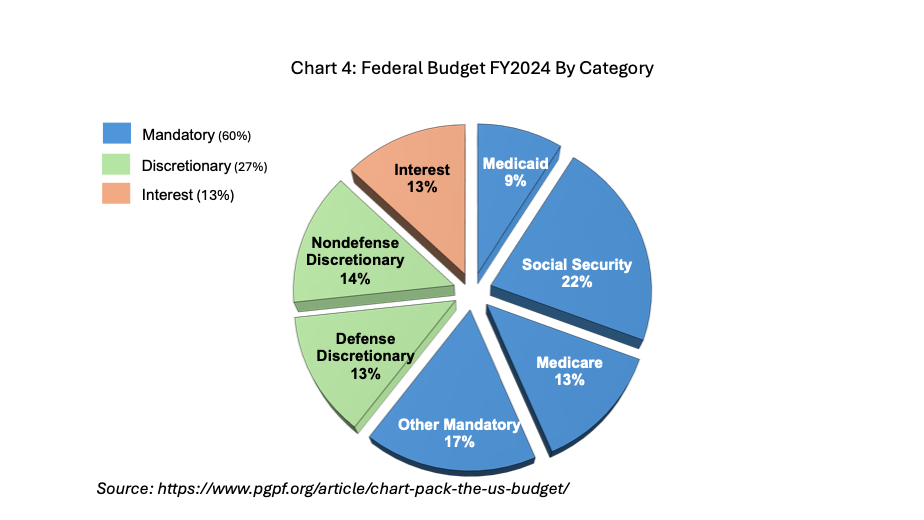
US Spends 13 Percent of the Total Budget on Defense: The Same Amount as Interest
Defense spending is discretionary; it is part of the federal budget that must be approved every fiscal year. Of the $6.8 trillion in 2024 federal spending, only 27 per cent was discretionary. With most of the budget already accounted for in mandatory spending and paying interest on the massive national debt, there is relatively not much left for defense and the rest of the government. For those who argue we spend too much on defense and not enough on social programs, the actual numbers do not support that opinion (Chart 4).
Defense Spending in the Future?
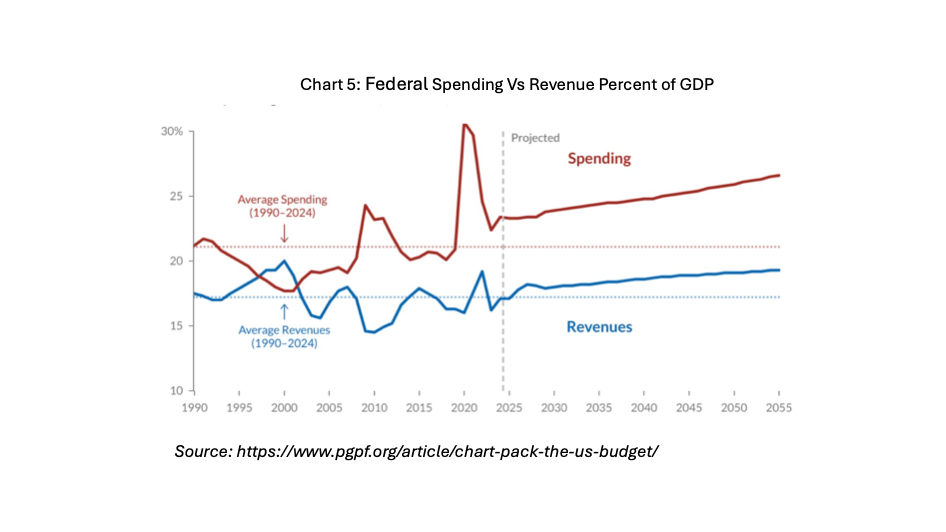
For FY 2026 the defense budget request is for $892.6 billion, or a five percent increase. It would be expected that future defense budgets will increase at least a nominal amount of two to three percent. This would not normally be anything to worry about, after all we have a $30 trillion economy. But the US economy is not anywhere close to normal times. Every analysis of future federal spending indicates large deficits well into the future (Chart 5).
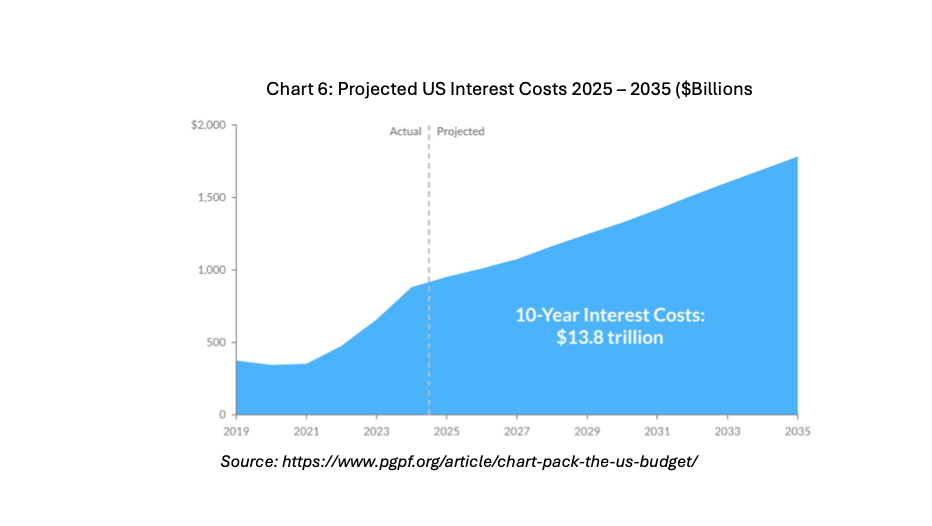
And with the deficit spending, interest payments will take more and more of the federal budget, by 2035 about $1.8 trillion. That amount is twice the proposed FY 2026 defense budget (Chart 6).
As this was not enough, the share of the federal budget for mandatory spending is projected to grow as well. Interest costs and mandatory spending will eventually squeeze discretionary spending to unimaginable low levels. Within ten years, without significant change in federal spending, most likely we will see the defense budget steadily decreasing. (Chart 7).
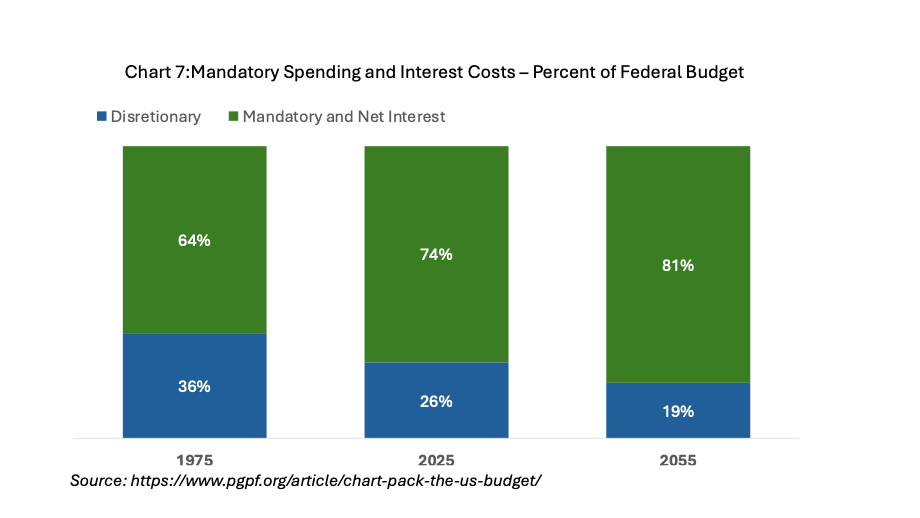
So, what does this tell us about the future defense capability of the US? If nothing changes, into the next decade defense budgets will become more and more difficult to fund. And, without a very significant change in federal spending to (1) bend the curve and reduce deficits and (2) reallocate mandatory versus discretionary spending, our current military superiority (especially versus China) is not sustainable.


